What is an EPD?
An Environmental Product Declaration (EPD) is an independently verified document that reports a product's environmental performance in a standard format. EPDs are based on ISO 14025. In Europe, EPDs for construction products follow EN 15804.
An EPD gives specifiers verified, standardised data on the environmental impact of a piping system.
What is the difference between an LCA and an EPD?
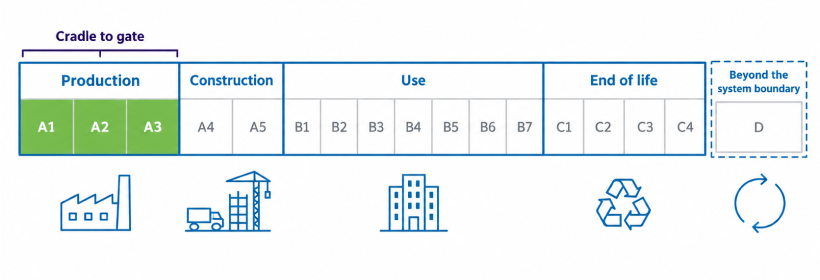
A life cycle assessment (LCA) is a science-based method for evaluating a product's environmental performance over its complete life cycle. Depending on its scope, that runs from raw material extraction, manufacturing and transport to installation, use and end of life.
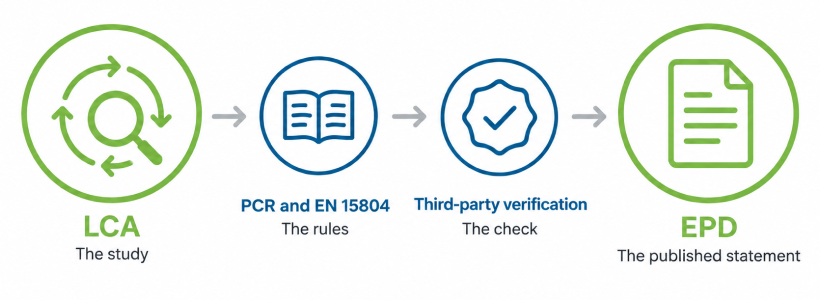
The LCA is the basis for an EPD. The EPD is the third-party verified statement that reports those results for a product or system in a standard format.
An EPD does not rate a product as good or bad. It gives you verified data, so you can choose materials on documented environmental performance rather than marketing claims.
What do EPDs offer piping specifiers?
They give you objective data for specification
EPDs report measurable indicators such as global warming potential (GWP), primary energy demand and resource use.
For example, the EPD for GF Piping Systems' INSTAFLEX PB covers the full life cycle of its PB-1 hot and cold water system. It declares a reference service life (RSL) of 50 years under stated conditions. That gives specifiers verifiable input on both durability and environmental impact.
They feed into building-level assessments
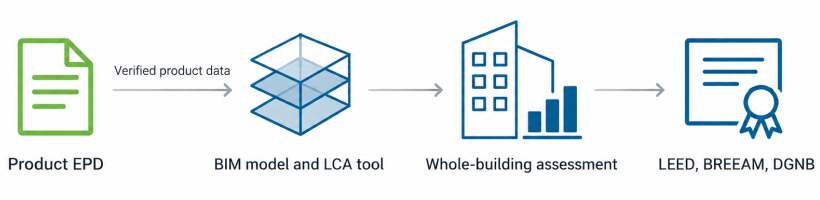
EPD data slots into LCA tools, BIM object data and whole-building assessments. Verified product data reduces uncertainty in environmental modelling.
EPDs also provide the product-level evidence that green building schemes such as LEED, BREEAM and DGNB reward. Read more in our article LEED vs. BREEAM: what you need to know.
They help you meet client and regulatory requirements
Public clients and major developers increasingly ask for EPDs in procurement and certification. Specifying piping systems with valid EPDs shows due diligence now and prepares projects for stricter carbon reporting later.
They help manufacturers improve their products
An EPD shows where a product's impact comes from. That makes it a tool for improvement, not just selection.
Thermaflex, for example, uses life cycle data from its Flexalen PB-1 systems to target energy reductions and better recyclability. Wavin uses Ecochain footprinting to assess and lower impacts across its product ranges.
"At Thermaflex, transparency in environmental performance is part of our DNA. An Environmental Product Declaration (EPD) helps to turn complex environmental data into clear, verified insights. Since our first EPD in 2014, we have used EPDs to give customers clear, trustworthy information that supports more sustainable choices."
Christy Du, Marketing & Sales Enablement Manager, Thermaflex International
How to use EPDs in piping specification
- Check scope and validity. Look for EPDs that follow the current version of EN 15804 and cover the full life cycle. Confirm third-party verification, the programme operator and the publication date. EPDs are often valid for five years, so check that it hasn't expired.
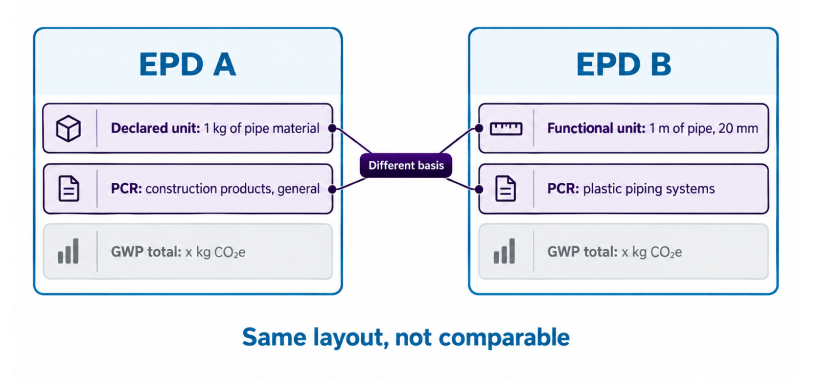
- Compare like with like. EPDs are only comparable when they share the same product category rules and functional unit, for example per metre of pipe of a given dimension and pressure class. Focus on the indicators that matter for your project, usually GWP, energy demand and end of life.
- Check the reference service life. Make sure the declared RSL (reference service life) matches your design assumptions and maintenance strategy.
- Document your choice. Record EPD numbers in the specification and BIM model to simplify certification submissions.
Which PB-1 piping systems have an EPD?
PBPSA member companies including GF Piping Systems, Thermaflex and Wavin publish EPDs for their PB-1 piping systems. Specifiers can use this verified data alongside technical performance data when choosing pipe material. EPD coverage differs by product range and market, so ask the manufacturer for the current EPD for the system you are specifying.
References
What is an EPD?
An Environmental Product Declaration (EPD) is an independently verified document that reports a product's environmental performance in a standard format. EPDs are based on ISO 14025. In Europe, EPDs for construction products follow EN 15804.
An EPD gives specifiers verified, standardised data on the environmental impact of a piping system.
What is the difference between an LCA and an EPD?
A life cycle assessment (LCA) is a science-based method for evaluating a product's environmental performance over its complete life cycle. Depending on its scope, that runs from raw material extraction, manufacturing and transport to installation, use and end of life.
The LCA is the basis for an EPD. The EPD is the third-party verified statement that reports those results for a product or system in a standard format.
An EPD does not rate a product as good or bad. It gives you verified data, so you can choose materials on documented environmental performance rather than marketing claims.
What do EPDs offer piping specifiers?
They give you objective data for specification
EPDs report measurable indicators such as global warming potential (GWP), primary energy demand and resource use.
For example, the EPD for GF Piping Systems' INSTAFLEX PB covers the full life cycle of its PB-1 hot and cold water system. It declares a reference service life (RSL) of 50 years under stated conditions. That gives specifiers verifiable input on both durability and environmental impact.
They feed into building-level assessments
EPD data slots into LCA tools, BIM object data and whole-building assessments. Verified product data reduces uncertainty in environmental modelling.
EPDs also provide the product-level evidence that green building schemes such as LEED, BREEAM and DGNB reward. Read more in our article LEED vs. BREEAM: what you need to know.
They help you meet client and regulatory requirements
Public clients and major developers increasingly ask for EPDs in procurement and certification. Specifying piping systems with valid EPDs shows due diligence now and prepares projects for stricter carbon reporting later.
They help manufacturers improve their products
An EPD shows where a product's impact comes from. That makes it a tool for improvement, not just selection.
Thermaflex, for example, uses life cycle data from its Flexalen PB-1 systems to target energy reductions and better recyclability. Wavin uses Ecochain footprinting to assess and lower impacts across its product ranges.
"At Thermaflex, transparency in environmental performance is part of our DNA. An Environmental Product Declaration (EPD) helps to turn complex environmental data into clear, verified insights. Since our first EPD in 2014, we have used EPDs to give customers clear, trustworthy information that supports more sustainable choices."
Christy Du, Marketing & Sales Enablement Manager, Thermaflex International
How to use EPDs in piping specification
- Check scope and validity. Look for EPDs that follow the current version of EN 15804 and cover the full life cycle. Confirm third-party verification, the programme operator and the publication date. EPDs are often valid for five years, so check that it hasn't expired.
- Compare like with like. EPDs are only comparable when they share the same product category rules and functional unit, for example per metre of pipe of a given dimension and pressure class. Focus on the indicators that matter for your project, usually GWP, energy demand and end of life.
- Check the reference service life. Make sure the declared RSL (reference service life) matches your design assumptions and maintenance strategy.
- Document your choice. Record EPD numbers in the specification and BIM model to simplify certification submissions.
Which PB-1 piping systems have an EPD?
PBPSA member companies including GF Piping Systems, Thermaflex and Wavin publish EPDs for their PB-1 piping systems. Specifiers can use this verified data alongside technical performance data when choosing pipe material. EPD coverage differs by product range and market, so ask the manufacturer for the current EPD for the system you are specifying.