Thermaflex enables energy transition in Nieuwe Wipwei
The Nieuwe Wipwei district heating expansion in Roosendaal, The Nethertlands, demonstrates how advanced Polybutene-1 (PB-1) pre-insulated piping systems can accelerate the energy transition in urban environments. By repurposing industrial waste heat from a local processing plant, the municipality has implemented a fourth-generation low temperature district heating network that delivers sustainable comfort while significantly reducing carbon emissions.
This project illustrates how PB-1 piping technology supports resilient, future-proof infrastructure in line with ambitious climate targets.
Project background
Located in Roosendaal, the Netherlands, the Nieuwe Wipwei development forms part of a wider Smart Climate Grid initiative. The objective was to expand an existing innovative heating network by connecting a residential district to a system already supplying a local college.
The network utilises residual heat at approximately 42°C from a nearby waste processing facility operated by SUEZ. This energy source, previously unused, now provides a stable and sustainable heat supply. The project reduces reliance on natural gas while improving overall system efficiency.

Project objectives
The key goals of the Roosendaal initiative were:
- Deployment of a fourth-generation low temperature district heating network
- Reduction of CO₂ emissions through the use of recovered waste heat
- Improvement of energy efficiency across public and residential buildings
- Development of scalable, sustainable urban energy infrastructure
- Minimisation of installation disruption to residents
The integration of recycled heat into a local distribution network represents a practical and replicable model for municipalities seeking to decarbonise heating.
Technical solution
A pre-insulated Flexalen® 600 piping system was selected as the core infrastructure for the network. The Cradle to Cradle Certified® system, supplied with plug-and-play house connections, enabled rapid deployment while meeting strict sustainability requirements.
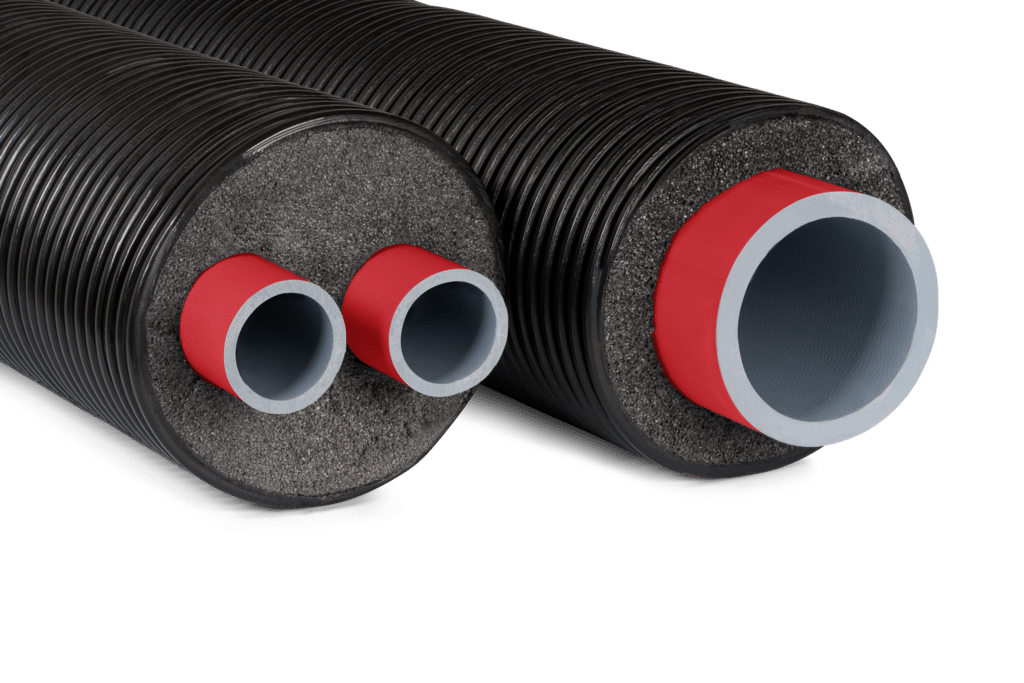
Polybutene-1 provides several advantages particularly relevant to low temperature district heating:
- High flexibility and low weight, facilitating efficient installation in urban environments
- Long-term resistance to internal pressure and creep at elevated temperatures
- Excellent durability and chemical resistance
- Reduced maintenance requirements due to minimised jointing
- Recyclability, supporting circular economy principles
These characteristics align closely with the technical demands of fourth-generation district heating, where lower operating temperatures require careful system design to minimise heat loss and optimise hydraulic performance.
Implementation
The expansion of the network was delivered through close cooperation between infrastructure specialists and the municipal energy company. The objective was to complete installation within three weeks in order to minimise disruption to local residents.
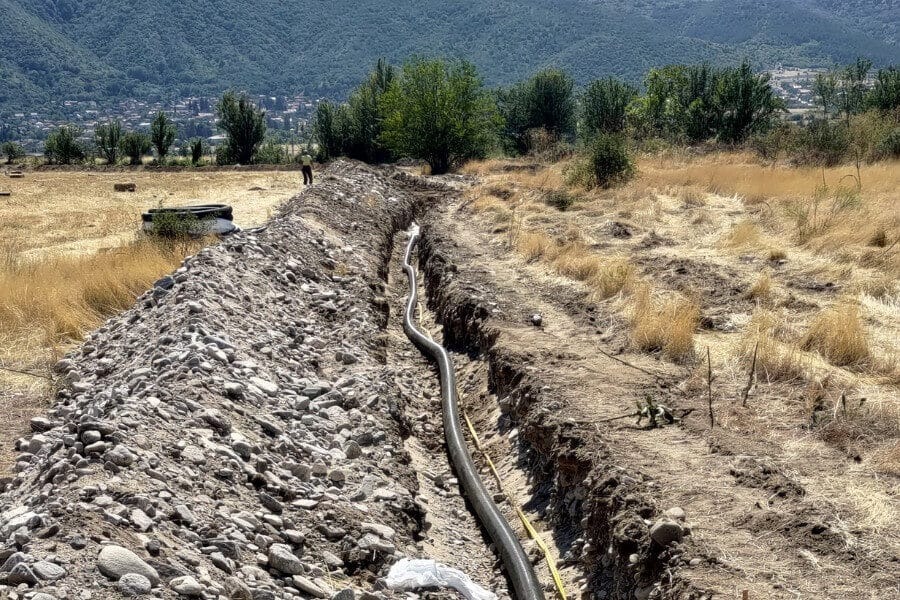
The flexible PB-1 pre-insulated system enabled rapid trenching, pipe laying and connection. The structured installation approach ensured that a reliable low temperature network was delivered within the required timeframe.
The system now supplies both educational facilities and residential properties. The connected college has already reported a 50 percent reduction in energy costs, demonstrating the direct economic benefit of utilising recovered heat.

Results and long-term potential
The project confirms the viability of low temperature district heating based on waste heat recovery. By using residual industrial heat at 42°C, thermal losses are significantly reduced while maintaining a high overall energy yield.
Importantly, the waste processing facility has a total available waste heat capacity of approximately 60 MWh, of which only 5 MWh is currently utilised. This indicates substantial potential for further network expansion within Roosendaal and beyond.
The concept is highly scalable. Waste heat is widely available globally and represents a practical alternative to conventional gas-fired heating systems. By combining recovered energy sources with advanced PB-1 piping systems, municipalities can accelerate decarbonisation while ensuring reliable and comfortable heating for end users.

Conclusion
The Nieuwe Wipwei project demonstrates how innovative district heating concepts, supported by technically advanced Polybutene piping systems, can transform urban heating infrastructure. The integration of sustainability principles into practical engineering solutions enables reduced emissions, lower operating costs and improved long-term resilience.
As cities across Europe pursue climate neutrality targets, low temperature networks based on recovered heat offer a realistic pathway forward. PB-1 piping technology provides the durability, flexibility and system integrity required to make such transitions both technically robust and economically viable.
For more information, visit the Thermaflex website.

Thermaflex enables energy transition in Nieuwe Wipwei
The Nieuwe Wipwei district heating expansion in Roosendaal, The Nethertlands, demonstrates how advanced Polybutene-1 (PB-1) pre-insulated piping systems can accelerate the energy transition in urban environments. By repurposing industrial waste heat from a local processing plant, the municipality has implemented a fourth-generation low temperature district heating network that delivers sustainable comfort while significantly reducing carbon emissions.
This project illustrates how PB-1 piping technology supports resilient, future-proof infrastructure in line with ambitious climate targets.
Project background
Located in Roosendaal, the Netherlands, the Nieuwe Wipwei development forms part of a wider Smart Climate Grid initiative. The objective was to expand an existing innovative heating network by connecting a residential district to a system already supplying a local college.
The network utilises residual heat at approximately 42°C from a nearby waste processing facility operated by SUEZ. This energy source, previously unused, now provides a stable and sustainable heat supply. The project reduces reliance on natural gas while improving overall system efficiency.
Project objectives
The key goals of the Roosendaal initiative were:
- Deployment of a fourth-generation low temperature district heating network
- Reduction of CO₂ emissions through the use of recovered waste heat
- Improvement of energy efficiency across public and residential buildings
- Development of scalable, sustainable urban energy infrastructure
- Minimisation of installation disruption to residents
The integration of recycled heat into a local distribution network represents a practical and replicable model for municipalities seeking to decarbonise heating.
Technical solution
A pre-insulated Flexalen® 600 piping system was selected as the core infrastructure for the network. The Cradle to Cradle Certified® system, supplied with plug-and-play house connections, enabled rapid deployment while meeting strict sustainability requirements.
Polybutene-1 provides several advantages particularly relevant to low temperature district heating:
- High flexibility and low weight, facilitating efficient installation in urban environments
- Long-term resistance to internal pressure and creep at elevated temperatures
- Excellent durability and chemical resistance
- Reduced maintenance requirements due to minimised jointing
- Recyclability, supporting circular economy principles
These characteristics align closely with the technical demands of fourth-generation district heating, where lower operating temperatures require careful system design to minimise heat loss and optimise hydraulic performance.
Implementation
The expansion of the network was delivered through close cooperation between infrastructure specialists and the municipal energy company. The objective was to complete installation within three weeks in order to minimise disruption to local residents.
The flexible PB-1 pre-insulated system enabled rapid trenching, pipe laying and connection. The structured installation approach ensured that a reliable low temperature network was delivered within the required timeframe.
The system now supplies both educational facilities and residential properties. The connected college has already reported a 50 percent reduction in energy costs, demonstrating the direct economic benefit of utilising recovered heat.
Results and long-term potential
The project confirms the viability of low temperature district heating based on waste heat recovery. By using residual industrial heat at 42°C, thermal losses are significantly reduced while maintaining a high overall energy yield.
Importantly, the waste processing facility has a total available waste heat capacity of approximately 60 MWh, of which only 5 MWh is currently utilised. This indicates substantial potential for further network expansion within Roosendaal and beyond.
The concept is highly scalable. Waste heat is widely available globally and represents a practical alternative to conventional gas-fired heating systems. By combining recovered energy sources with advanced PB-1 piping systems, municipalities can accelerate decarbonisation while ensuring reliable and comfortable heating for end users.
Conclusion
The Nieuwe Wipwei project demonstrates how innovative district heating concepts, supported by technically advanced Polybutene piping systems, can transform urban heating infrastructure. The integration of sustainability principles into practical engineering solutions enables reduced emissions, lower operating costs and improved long-term resilience.
As cities across Europe pursue climate neutrality targets, low temperature networks based on recovered heat offer a realistic pathway forward. PB-1 piping technology provides the durability, flexibility and system integrity required to make such transitions both technically robust and economically viable.
For more information, visit the Thermaflex website.